



Stick Boom Truck Range Explained: Mini to Heavy Duty, Which Tier Fits Your Job
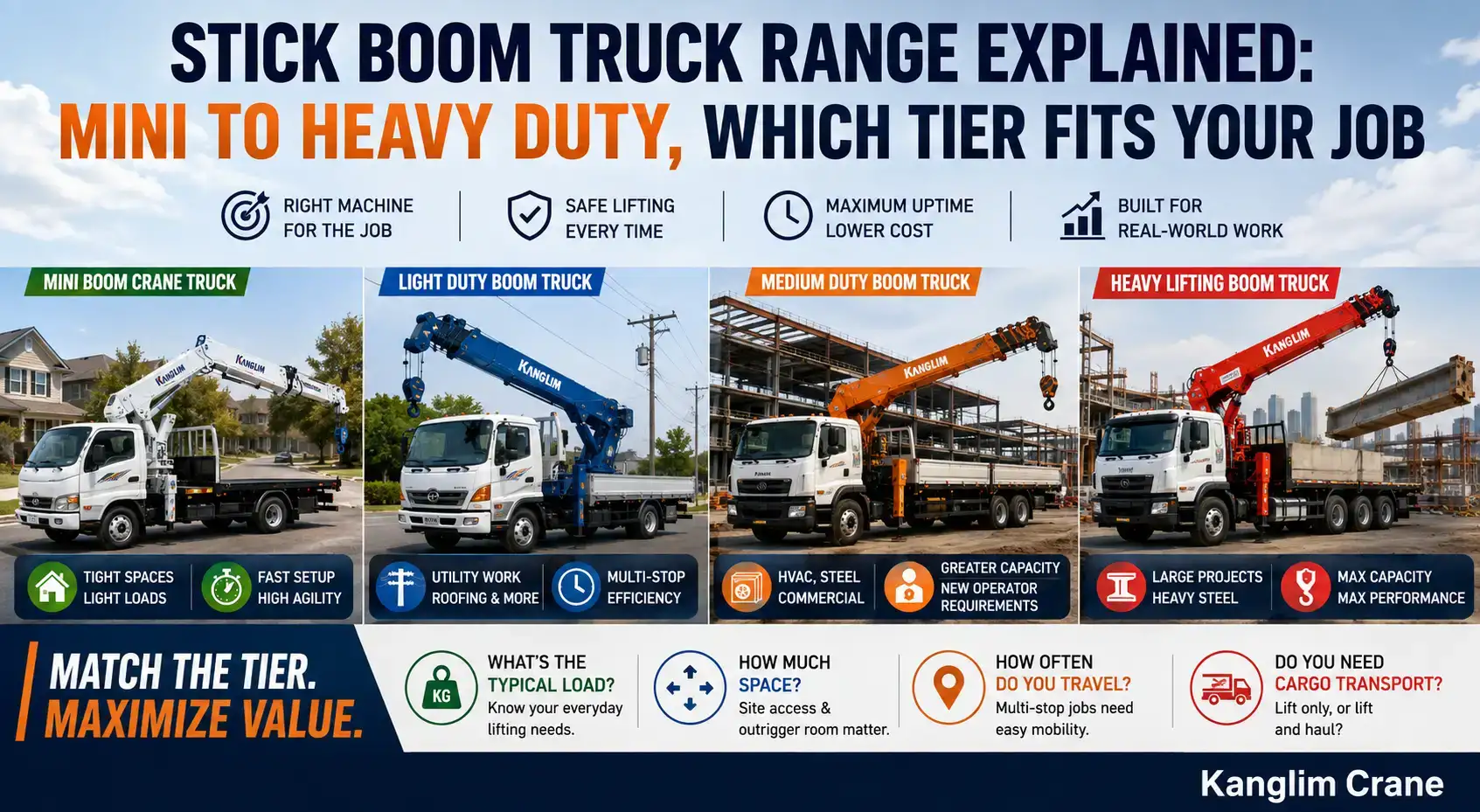
Boom truck buyers often compare models by price or by a single tonnage number. This approach misses the real question. The boom truck category covers four distinct tiers, and each tier suits a different job type, crew pattern, and site condition. A machine that works well for one contractor can be the wrong choice for another, even when both call it a boom truck. This guide matches job type to tier, so the decision is based on how the machine will actually be used rather than budget alone.
01. Why Boom Trucks Are Split Into Tiers in the First Place
Manufacturers scale several things together as tonnage increases. The chassis gets reinforced to handle greater load stress. The hydraulic system grows to support a heavier boom and higher lifting force. Permitting and licensing requirements shift as the vehicle approaches heavier weight classes. These three factors move together, which is why a boom truck cannot simply be upgraded in tonnage without changing the rest of the machine.
This tiering exists because job requirements vary widely across industries that use boom trucks. A signage crew and a commercial steel contractor both need a boom truck, but neither would choose the same tier. The rest of this guide breaks down each tier by the jobs it actually fits, not by specification numbers alone.
02. Mini Boom Crane Truck: Best Fit Scenarios
This tier sits at the lowest tonnage point in the boom truck range. Its value comes from its small footprint and quick setup rather than raw lifting power, which makes it suited to a specific set of jobs and site conditions rather than general-purpose use.
2.1 Job Types This Tier Suits
A mini boom crane truck fits jobs where the load is light and the space around the work area is tight. Sign installation, small residential deliveries, and light utility tasks fall into this category. The lifting task itself does not demand significant tonnage, so the smaller chassis and hydraulic system are enough.
2.2 Site Conditions Where a Compact Footprint Matters More Than Capacity
Residential neighborhoods, narrow commercial lots, and crowded parking areas favor this tier. The machine needs to turn sharply, park in a limited space, and avoid blocking traffic or driveways. A larger boom truck would struggle to maneuver in these same conditions, even if it could technically lift more weight.
2.3 Warning Signs This Tier Is Too Small for the Job
If the load regularly approaches the upper limit of this tier's rated capacity, the margin for safe operation shrinks. If the boom needs to extend to its maximum reach on most jobs rather than occasionally, the load moment drops fast at that reach and reduces safe lifting capacity further. These patterns signal that the next tier up is a better fit.
03. Light Duty Boom Truck: Best Fit Scenarios
This tier sits one step above the mini tier in lifting capacity while keeping much of the same fast, single-operator setup. This makes it a common choice for crews that need slightly more power without adding significant weight, size, or licensing complexity to their equipment.
3.1 Job Types This Tier Suits
A light duty boom truck handles utility pole work, roofing material placement, and similar tasks that need slightly more lifting power than a mini unit provides. The added capacity covers heavier individual loads without moving into a different licensing or permitting category.
3.2 Crew and Scheduling Patterns That Favor This Tier
Crews that travel to several job sites in one day benefit from this tier's fast setup time and standard highway drivability. Utility maintenance teams and multi-stop service crews commonly rely on this tier because it balances lifting capacity with quick deployment.
3.3 Warning Signs This Tier Is Too Small for the Job
Frequent use near maximum rated capacity, repeated need for extended boom reach, or a shift toward heavier commercial materials all point toward the medium duty tier. If a crew starts scheduling two trips with a lighter machine to move what one heavier machine could handle in a single trip, that is a clear signal to reconsider tier selection.
04. Medium Duty Boom Truck: Best Fit Scenarios
This tier marks the point where lifting capacity starts to matter as much as speed and maneuverability. This tier introduces a stronger frame and larger hydraulic system, which changes both the jobs it fits and some of the operational requirements around running it.
4.1 Job Types This Tier Suits
A medium duty boom truck covers HVAC unit installation, small steel placement, and general commercial construction support. These jobs need meaningful lifting power but do not require the size or permitting associated with a full industrial crane.
4.2 What Changes Operationally at This Tier
Crew requirements often shift at this tier. Some jurisdictions require additional certification for operators running medium duty equipment, and insurance premiums can increase compared to lighter tiers. Contractors should confirm local licensing rules before committing to this tier, since requirements vary by region.
4.3 Warning Signs This Tier Is Too Small for the Job
If job sites increasingly involve loads that push toward this tier's upper capacity, or if projects require sustained lifting over multiple hours rather than short tasks, the next tier up becomes the more appropriate option. Repeated permitting delays tied to weight limits can also signal that the current tier no longer matches the workload.
05. Heavy Lifting Boom Trucks: Best Fit Scenarios
This tier sits at the top of the boom truck range. At this tier, structural reinforcement and hydraulic capacity begin to approach what smaller truck-mounted cranes offer, which makes the choice between staying within the boom truck category or moving to a dedicated crane a more relevant question.
5.1 Job Types This Tier Suits
Heavy lifting boom trucks handle larger commercial projects and light industrial work. These jobs involve heavier steel sections, larger equipment placement, or sustained lifting tasks that exceed what a medium duty machine can safely manage.
5.2 Where This Tier Starts Overlapping With Entry-Level Truck-Mounted Cranes
At the top of the boom truck range, tonnage and structural reinforcement begin to resemble smaller truck-mounted cranes. The boom truck still retains its flatbed deck and standard highway drivability, which a truck-mounted crane does not offer. This overlap means the choice between the two often comes down to whether cargo transport is needed alongside the lift.
5.3 How to Know the Job Actually Needs a Dedicated Crane Instead
If a project requires lifting capacity beyond what any boom truck tier offers, or if the job involves continuous heavy lifting over an extended period at a single location, a dedicated truck-mounted crane becomes the more suitable choice. Projects with these characteristics typically justify the higher upfront cost and slower setup time that a truck-mounted crane requires.
06. A Simple Framework for Matching Job to Tier
Choosing the right tier does not require memorizing every specification across the range. A short set of questions, combined with an honest look at how the machine will actually be used, narrows the decision quickly and avoids both undersizing and unnecessary overspending.
6.1 Key Questions to Ask Before Choosing
Four questions narrow the decision quickly. What is the typical load weight for this type of job. How much space does the site provide for maneuvering and outrigger deployment. How often will the machine need to travel between locations in a single day. Does the job require cargo transport alongside the lift, or only the lifting function itself.
6.2 Why Buying One Size Up for Flexibility Is Not Always the Right Call
Contractors sometimes choose a larger tier than needed, assuming extra capacity provides a safety margin for future jobs. This approach increases fuel consumption, raises insurance costs, and can make the machine harder to maneuver on tighter sites where the smaller tier would have worked fine. Matching the tier to the typical job, rather than the largest possible job, usually produces better day-to-day value.
6.3 How Fleet Mix Solves This for Contractors With Varied Job Types
Contractors who handle a wide range of job types often benefit from owning more than one tier rather than trying to find a single machine that covers every scenario. A mini or light duty unit handles frequent small jobs efficiently, while a medium or heavy lifting unit stays available for larger projects. This mix keeps operating costs aligned with the actual work being done, rather than running a larger machine on jobs that do not require it.
Conclusion
Selecting the right boom truck tier comes down to matching the machine to the job, not to the largest available specification sheet. Mini and light duty tiers suit frequent, lighter, multi-stop work. Medium duty covers general commercial support tasks. The top tier handles larger projects that approach the edge of what a boom truck can do before a dedicated truck-mounted crane becomes necessary. Reviewing typical load weight, site space, travel frequency, and cargo needs before purchasing prevents both undersizing and unnecessary overspending on capacity that will rarely be used.
Still Not Sure Which Tier Matches Your Work?
Specifications only tell part of the story. The right tier depends on the actual mix of jobs your crew handles, and that is easier to work through with someone who can walk through the details with you. Kanglim Crane builds across the full boom truck range, from mini to heavy lifting, and can help match a tier to your typical load weight and site conditions. For fleets planning to add several units at once, wholesale boom truck pricing is also available to bring down the cost per unit.
Contact us with your project details, and our team can help narrow down the right fit before you commit to a purchase.
Featured Articles
A truck crane and a boom truck can look similar from across a job site, both mounted on wheels wi
READ FULLA boom truck looks straightforward from the outside: a
READ FULLSmall, occasional lifts are exactly the kind of work that makes renting feel like the obvious cho
READ FULL