



Is Renting Enough for Small Jobs, or Is It Time to Buy a Small Boom Crane?
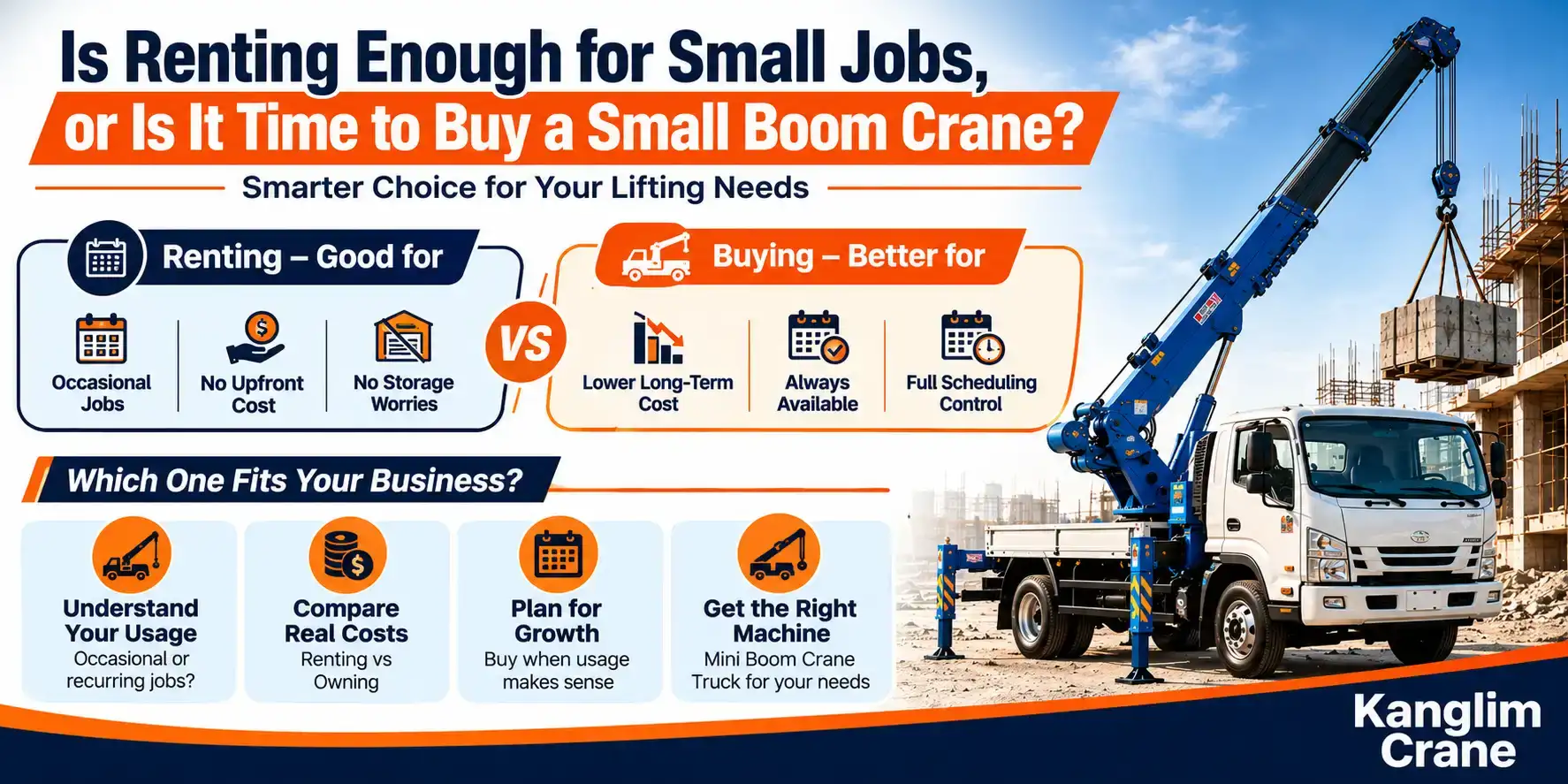
Small, occasional lifts are exactly the kind of work that makes renting feel like the obvious choice. No upfront cost, no storage to worry about, no equipment sitting idle between jobs. That logic holds up for a genuine one-off. It starts to break down once "small jobs" become a recurring part of the work, and the rental bill quietly turns into a monthly expense nobody planned for.
This guide looks at where that line actually sits. Not in general terms, but in the real costs on both sides, so the question of renting versus owning a mini boom crane truck gets answered by the numbers a specific business is actually seeing, not by a rule of thumb that may not apply to how often small jobs really come up.
01. What Renting a Small Crane Actually Costs
Rental pricing looks simple on the surface, but the quoted rate rarely reflects the full cost of getting the machine to a job site and back.
1.1 Typical Rental Rate Structure
Daily and weekly rental rates for this class of equipment scale with rental duration, with longer rentals typically costing less per day than a single-day booking. Weekend and holiday surcharges are common, and rates often climb during peak construction seasons when demand for compact lifting equipment increases.
1.2 Hidden Costs Left Out of the Quote
Delivery and pickup fees, operator charges if the rental company requires a certified driver, and fuel surcharges frequently sit outside the headline daily rate. A rental that looks affordable at first quote can end up costing considerably more once these line items are added, particularly for jobs located far from the rental company's yard.
02. What Owning This Tier Actually Costs
Ownership shifts the cost structure from a per-use fee to a combination of upfront investment and ongoing responsibility.
2.1 Upfront Purchase Price Range
This tier sits at the lower end of the boom truck price range, since its compact chassis and smaller hydraulic system require less material and reinforcement than larger tiers. This lower entry cost is part of what makes ownership a realistic option even for smaller operations rather than only large fleets.
2.2 Ongoing Costs Once Owned
Maintenance, insurance, and storage space become the business's responsibility once the machine is purchased. These costs are generally predictable and lower per use than rental fees once the machine sees regular work, though they represent a fixed obligation regardless of how often the truck actually gets used in a given month.
03. Finding the Usage Breakeven Point
The core question in this decision is not which option costs less in the abstract, but at what usage frequency ownership starts costing less than repeated rentals.
3.1 How Usage Frequency Tips the Math
Businesses using a compact crane truck several days a month typically reach the breakeven point within the first year or two of ownership, since accumulated rental fees at that frequency often exceed the purchase price plus ongoing costs. Below that frequency, rental usually remains the more cost-effective choice.
3.2 Why Occasional Users Overestimate Their Actual Usage
Many buyers remember the jobs where they needed a crane truck and underestimate how often those needs actually arise across a full year. Tracking actual rental frequency over several months before deciding gives a more accurate picture than relying on a general sense of "we use this fairly often."
04. Availability and Scheduling Control
Cost is not the only factor in this decision. Access to the machine exactly when a job requires it matters just as much on tight schedules.
4.1 Rental Availability Risk
Rental fleets have limited inventory, and this class of truck can be booked out during busy seasons or on short notice, particularly in regions with high construction activity. A job that depends on rental availability carries a scheduling risk that ownership removes entirely.
4.2 Scheduling Flexibility With Ownership
An owned unit is available whenever the business needs it, without coordinating around another customer's rental period or a rental company's delivery schedule. This flexibility matters most for businesses that cannot predict exactly when a lifting need will come up.
05. Maintenance Responsibility and Machine Condition
Who handles upkeep, and how well that upkeep is managed, affects both cost and reliability differently depending on which option a business chooses.
5.1 Rental Company Responsibility vs Renter Responsibility
Rental companies typically handle major maintenance and repairs, which removes that burden from the renter. However, the renter has no control over how well a rental fleet is maintained, and equipment condition can vary significantly between units and rental periods.
5.2 Long-Term Condition Control With Ownership
Owning this equipment means the business controls its maintenance schedule directly, which allows problems to be caught early and repairs to be handled on the business's own timeline rather than depending on a rental company's fleet rotation and servicing standards.
06. Customization and Consistency Across Jobs
Beyond cost and availability, the actual machine a crew works with can vary significantly between rental periods in ways that affect day-to-day operation.
6.1 Why Rented Units Vary Between Rentals
A rental company's fleet includes units of different ages, configurations, and wear levels, so a crew may work with a different specific truck each time they rent, even from the same company. This inconsistency can affect operator familiarity and job efficiency.
6.2 The Consistency Advantage of Ownership
Running the same owned unit across every job means operators become familiar with its specific handling characteristics, and any custom configuration or attachment stays consistent from one job to the next, without the variation that comes from a rotating rental fleet.
07. Tax and Depreciation Considerations
Ownership introduces financial factors that simply do not apply to rental spending, and these can shift the overall cost comparison further.
7.1 How Depreciation Factors Into Ownership
Equipment depreciation can offer tax advantages that offset part of the ownership cost over time, depending on the applicable tax treatment for business equipment purchases. This is worth reviewing with an accountant familiar with equipment depreciation rules relevant to the business's situation.
7.2 Why This Doesn't Apply to Rental Costs
Rental fees are typically treated as a straightforward operating expense without the depreciation benefit that comes with owning a capital asset. This difference can meaningfully affect the true after-tax cost comparison between the two options.
08. When Renting Still Makes Sense
Despite everything covered so far, rental remains the better choice in specific, genuinely occasional scenarios.
8.1 One-Off Project Scenarios
A single project with a defined start and end date, unlikely to repeat, rarely justifies the commitment of ownership. Renting for that specific job avoids taking on a long-term asset for a short-term need.
8.2 Testing Fit Before Committing to a Purchase
Businesses unsure whether this tier actually fits their typical workload can rent first to confirm the machine handles their jobs well before committing to a purchase. This trial period reduces the risk of buying equipment that turns out to be the wrong tier for the work.
09. When Buying This Tier Makes Sense
On the other side of the decision, certain patterns clearly point toward ownership being the more sound long-term choice.
9.1 Recurring Job Patterns That Justify Ownership
A business handling regular signage work, small residential jobs, or light utility tasks on a recurring basis typically reaches the breakeven point quickly, making ownership the more cost-effective path once that pattern is established.
9.2 Signs a Business Has Outgrown Renting
Frequent rental bookings, recurring scheduling conflicts with rental availability, and rental costs that have become a predictable monthly expense are all signs that a business has moved past the point where renting still makes financial sense.
Where the Small-Jobs Line Actually Sits
Renting is the right call for small jobs that genuinely stay small and occasional. The decision changes once those small jobs start showing up every few weeks instead of every few months, since that's usually where ownership quietly becomes the cheaper option. Tracking how often the need actually comes up, rather than going on a general impression of "we don't use it that much," is what turns this into a real answer instead of a guess.
Find Out Where Your Small Jobs Actually Land
General breakeven guidance only goes so far without knowing the specific rental rates a business is currently paying and how often those small jobs actually come up. Kanglim Crane can walk through your typical job frequency and current rental spending to help you see where you actually land on the buy-versus-rent line, and what ownership would look like for your specific workload.
Share your rental frequency and typical job type, and our team will help you work out whether it's still smarter to rent, or time to buy.
Featured Articles
A truck crane and a boom truck can look similar from across a job site, both mounted on wheels wi
READ FULLA boom truck looks straightforward from the outside: a
READ FULLSmall, occasional lifts are exactly the kind of work that makes renting feel like the obvious cho
READ FULL